01 / Human anatomy
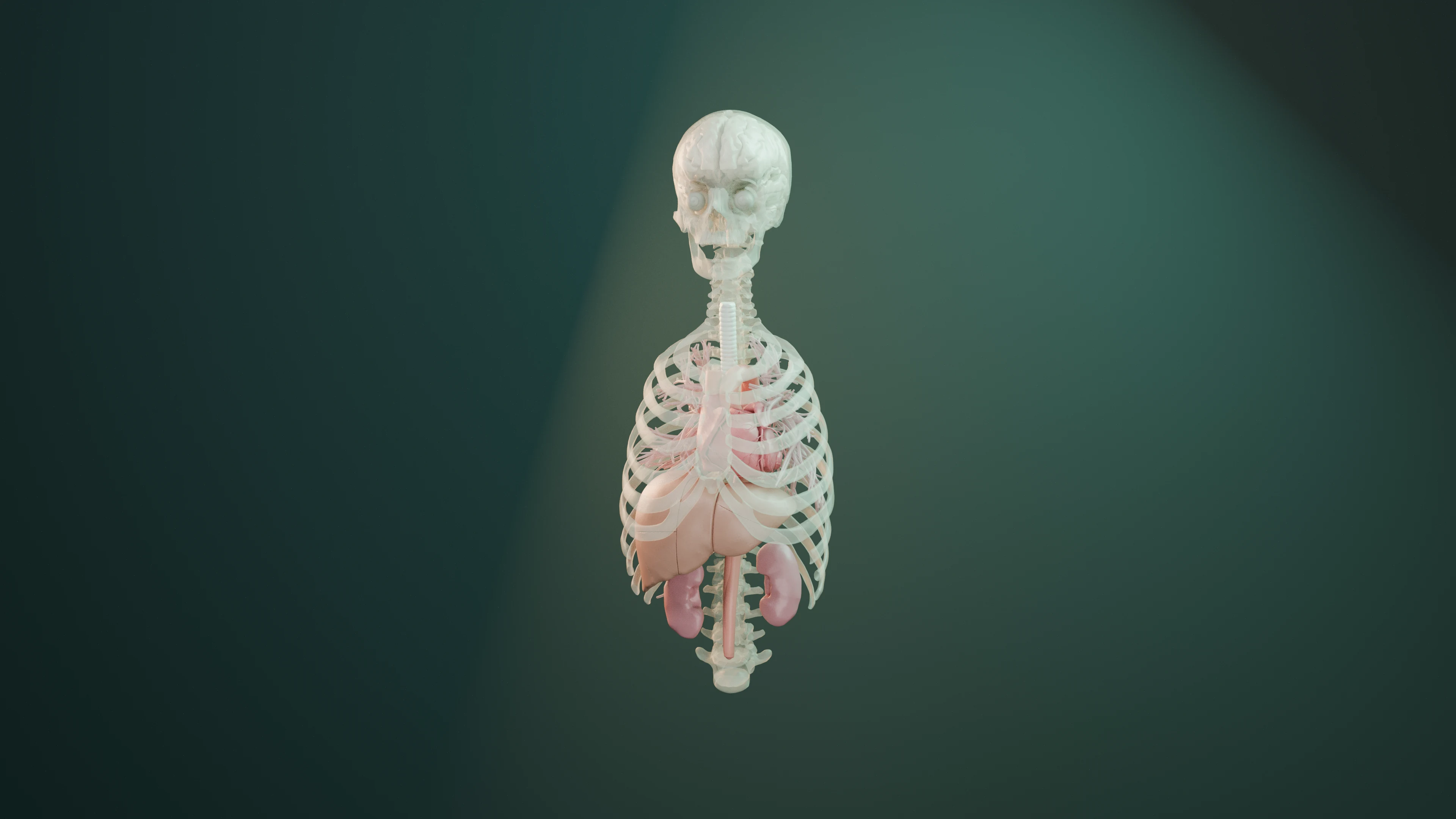
BodyParts3D.
The atlas assembles registered anatomical surfaces from BodyParts3D version 4.0. We retained the source positions, combined structures into selectable organs, simplified surfaces for the browser, and added illustrative materials. The body surface is cropped to the upper body. This is a general anatomical model, not a scan of an individual.
BodyParts3D, © The Database Center for Life Science licensed under CC Attribution 4.0 International.
02 / Molecular structure
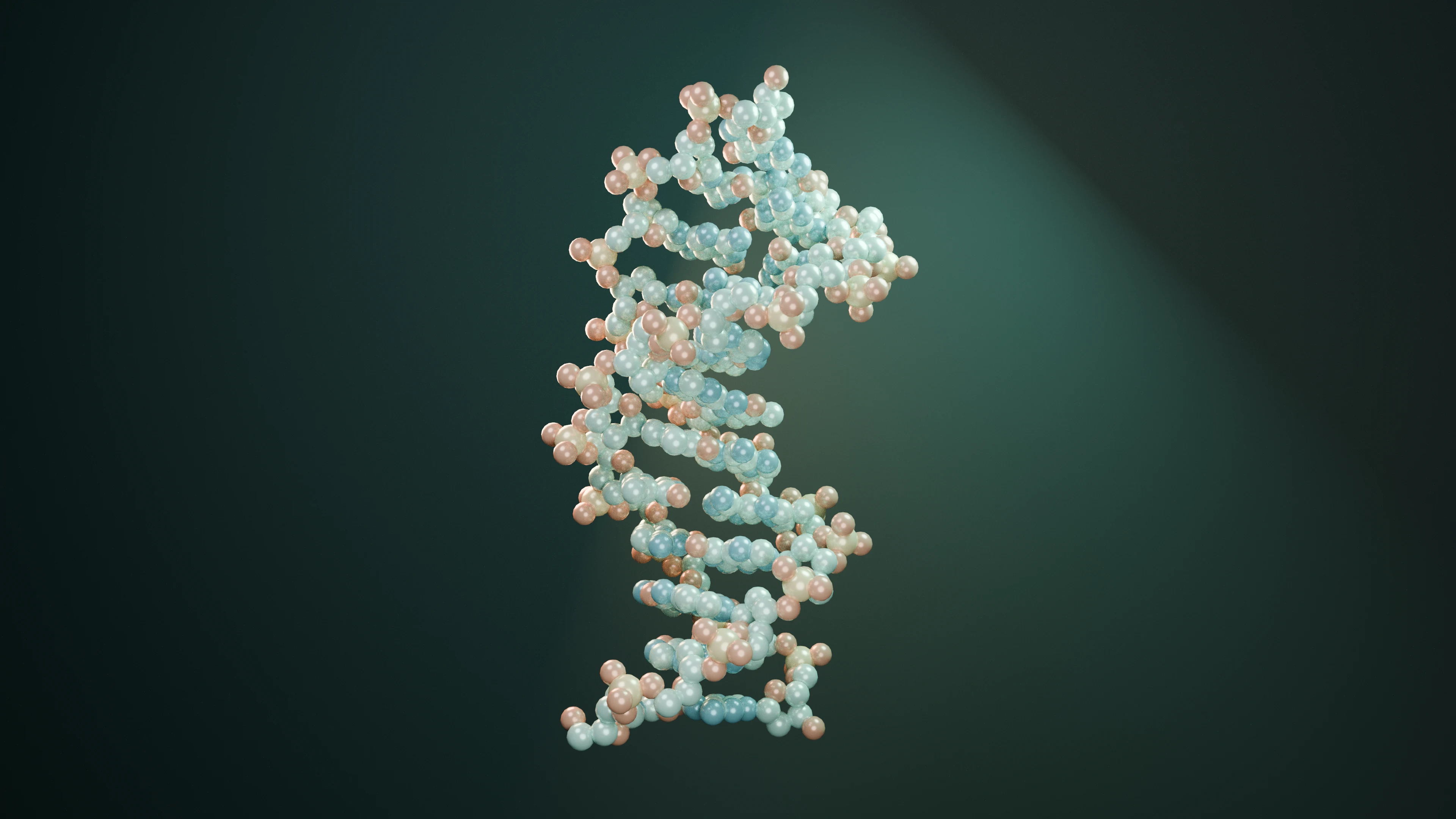
A deposited DNA structure.
The molecule is the B-DNA dodecamer in PDB entry 1BNA, associated with Drew et al. (1981). The view retains 486 deposited non-water atoms. Display bonds are inferred from covalent-distance thresholds; atom sizes and colours are illustrative. It is one short molecular structure, not a person’s genome.
PDB archive data are available under the CC0 1.0 Public Domain Dedication. Beyond created the materials, lighting, camera animation and native 4K renders in Blender.
03 / Simulated pulse waves
The source before the score.
The signal lab uses simulated PPG samples from Peter Charlton and colleagues’ Pulse Wave Database v0.2.0, virtual subject 1, at radial, digital and superficial temporal sites. Each site keeps its original finite samples at 500 Hz. Trailing NaN padding is omitted. Values remain in the relative units supplied by the database.
The motion slider adds a separately defined synthetic disturbance. It is a visual teaching overlay, not a fitted sensor model. The four-second sweep is deliberately slower than the source beat. The explorer does not derive HRV, autonomic tone or a clinical diagnosis.
04 / Interface research
Ideas with their boundaries intact.
The supplied discussion of Plethscape informed the focus on sensing location, original waveforms, and motion interference. The Beyond interface and implementation are original; Plethscape’s software and visual assets have not been copied.
The supplied autonomic-measurement white paper is included as a research perspective. Its claims are not presented as established clinical conclusions or as validated Beyond capabilities.
05 / Visual production
Science, imagery and interpretation.
The cellular and optical-chamber artwork was generated for Beyond as scientific concept art. Those images are 1672 × 941 native pixels and use relative-depth effects for spatial movement. The DNA and anatomy images are separate, source-derived Blender renders at a native 3840 × 2160. The molecular film animates actual 3D geometry.
Architectural images illustrate planned Beyond spaces. Synthetic records in the workflow and longitudinal charts are teaching examples. Their methods, uncertainty and status remain visible.