Coming soon to Denver Metro · Concept visualizationA closer perspective
Reimagined care based on the supplied Beyond architectural reference.
Beyond Longevity & Medical Center
A fuller view of you.
A considered approach to prevention, ongoing health and complex medical questions. The plan begins with the person, not a package of tests or treatments.
For people seeking considered medical follow-up alongside prevention. The planned pathway emphasizes medication review, appropriate routine measurements, chronic-condition coordination and a clear next appointment.
An initial assessment to define the question
Testing proportionate to symptoms and history
An agreed follow-up plan
Clinician staffing, visit scope and program inclusions are being finalized.
What deserves attention before it becomes a distraction?
For busy people who want time for a thoughtful preventive assessment. A coordinated review brings together medical history, cardiovascular and metabolic questions, lifestyle priorities and a practical follow-up plan.
A considered preventive review
Selected measurements with an explained purpose
A plan that fits work, travel and daily life
This is not a promise to extend lifespan or a requirement to buy every test.
For patients facing unresolved or overlapping concerns. The proposed pathway centers on careful records review, appropriate specialty testing and coordination with qualified specialists.
A structured review of prior findings
Focused questions, not universal panels
Specialist pathways when appropriate
No universal diagnosis or cure is promised. Some questions remain uncertain after testing.
Explore the intended experience, from your first question to a more informed next step.
CONCEPT VISUALIZATION / 01
Begin with you
Your priorities set the direction.
A first conversation starts with what you want to understand: your everyday health, a specific concern or the need for a more connected care relationship.
What to bring
Your questions and the kind of support you are looking for. No medical records are needed for an initial inquiry.
The next step
Discuss fit and the appropriate next conversation.
Explore a focused pathway with its intended scope, current availability and clinical boundaries. Memberships and specialist pathways answer different needs.
What to bring
Topics to discuss with a clinician: relevant history, current care and your practical priorities.
The next step
Clarify the proposed scope before arranging care or testing.
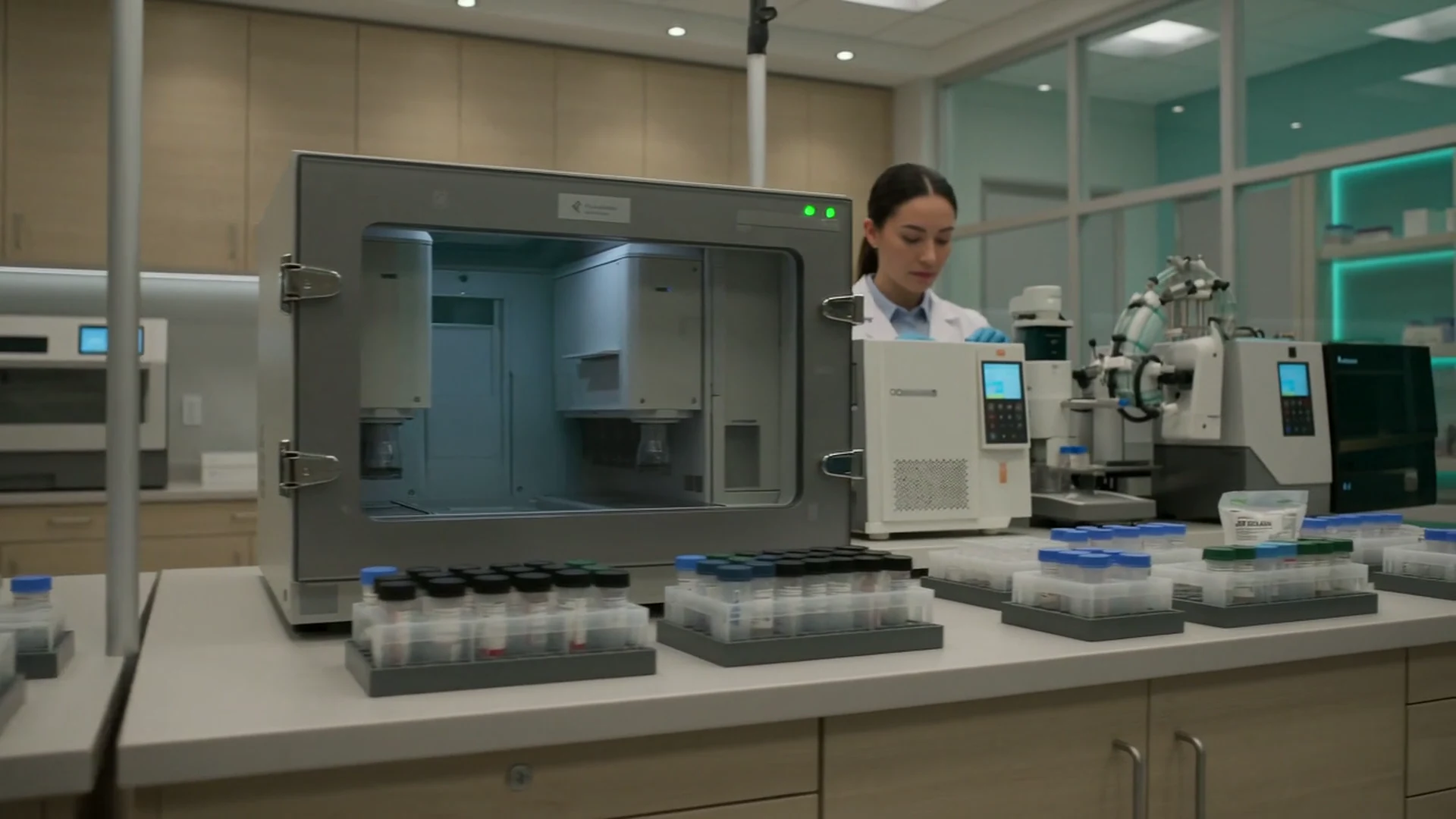
Review the method, specimen and interpretation limits behind a measurement. The directory connects routine testing with selected specialty and research questions.
What to bring
Questions about preparation, the specimen required and whether the result would change a decision.
The next step
Confirm suitability, availability and arrangements with the responsible team.
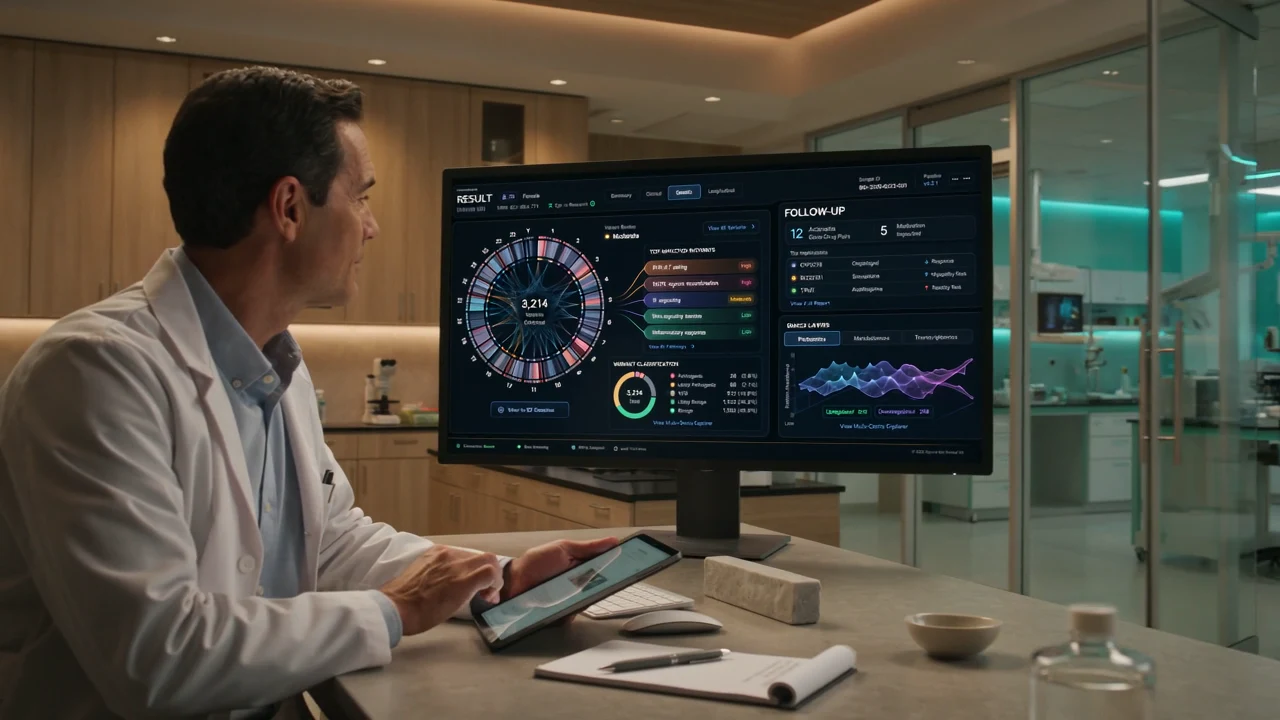
The care vision connects review and follow-up with the person’s history. Beyond Medical OS is being developed to make sources and changes easier to examine.
What to bring
What changed, what remains unclear and what you want to revisit with your care team.
The next step
Agree on responsibilities and any follow-up that fits the care plan.
Ambitious scientific questions spanning biological aging, selective filtration, mitochondrial function and therapeutic discovery. These records describe research or review, rather than current treatment access.
All values and illustrative bands used in this chart
Measurement
Unit
Visit 01
Visit 02
Visit 03
HbA1c
%
6.1 ± 0.15
5.9 ± 0.15
5.8 ± 0.15
LDL cholesterol
mg/dL
132 ± 7
131 ± 7
133 ± 7
hs-CRP
mg/L
2.4 ± 0.4
1.7 ± 0.4
2.1 ± 0.4
Services
Thirteen families. One question first.
From consultations and precision diagnostics to apheresis, cellular science and coordinated specialist care. Open a family to see what it is for and where it stands.
01Medical & longevity consultationsPlanned
What deserves attention now, and what can be followed thoughtfully over time?
A considered starting point: your priorities, medical history, everyday concerns and the next questions worth answering.
The proposed consultation pathway brings preventive planning, chronic-condition review and medication or supplement reconciliation into one conversation. A focused workup can then be agreed with the clinician.
An annual screening package is a scheduled assessment; an ongoing care relationship provides follow-up. Neither should be described as every test, every visit or emergency coverage.
Clinical leadership, staffing, appointment types and scope must be confirmed before scheduling opens. A specialist referral may be more appropriate than another in-house test.
Milestone: Confirm licensed clinical team, appointment scope, escalation process and released patient information.
Start with a medical question, connect the right routine context, then add specialty measurements when they can contribute.
The contemplated menu includes routine chemistry and blood counts, selected metabolic, nutritional and endocrine measurements, drug–gene questions and appropriate exposure or genetic pathways.
An individual analyte is one measured substance; a panel groups tests. An order is the clinical request and an accession is the laboratory tracking record. These are not interchangeable billing units.
The laboratory director must release the exact method, specimen requirements and reporting scope. More measured values do not automatically yield more useful care.
Milestone: Release a validated test menu with handling, performance, reporting and payment-route details.
A shared plan that connects findings with practical changes, appropriate treatment and a clear point for review.
The intended care plan may include conventional medical treatment, lifestyle support, a specialist opinion, further testing or a decision not to intervene. Supplements belong in the same interaction and medication review as other products.
Personalization is not an automated recipe. Relevant history, contraindications, interactions, selected biomarkers and appropriate drug–gene evidence inform a clinician’s judgment.
Follow-up should ask what changed, what did not, and whether the plan was tolerable and useful. A biomarker change alone does not prove that a treatment caused an improvement.
Milestone: Approve care protocols, clinician responsibilities and follow-up documentation.
Is an infusion clinically justified, and what must be monitored?
A planned service built around the clinical reason for treatment—not a menu of ingredients chosen by an algorithm.
Ordinary hydration, a prescribed medicine and an investigational compound are separate categories. The released offering must identify its formulation, route, supplier, authorized use and responsible clinician.
Assessment, consent, preparation, administration, monitoring and follow-up all belong in the service scope and price. No online laboratory-value widget will select an ingredient or dose.
No formulation is currently represented here as cleared for booking. Compounding status and safety are product- and route-specific, not conferred by a wellness label.
Milestone: Verify formulation and sourcing, prescribing authority, protocols, staffing and emergency readiness.
Could a defined filtration pathway address a specific clinical question while limiting replacement-fluid needs?
Investigating separation, selective processing where supported, and return—with the exact technology and fluid requirements made explicit.
The founder’s intended differentiator is donor-plasma-free selective filtration. The proposed description “nano plasmapheresis” does not by itself identify a machine, filter, authorized product or clinical indication.
A useful educational model starts with separating plasma from blood cells, then a system-specific processing stage, followed by return and any required fluid management. That model is a schematic, not the specification of an installed Beyond circuit.
No donor plasma is not the same as no donor-derived product: some protocols use human albumin. Donor plasma, donor-derived albumin and synthetic replacement fluids must be described separately.
Therapeutic plasma exchange, double-filtration plasmapheresis, adsorption, EBOO and INUSpheresis are not interchangeable labels. We do not claim preservation of all useful components, nanoplastic clearance or clinical benefit without the exact system and supporting evidence.
Milestone: Identify machine, filter, vendor, US status, indication, replacement-fluid protocol, clinician oversight and outcome evidence.
Does the defined chamber and clinical indication fit this patient’s needs?
A proposed supervised oxygen-therapy pathway whose equipment, pressure and clinical purpose must be specified before launch.
Medical hyperbaric oxygen therapy involves oxygen in a pressurized chamber. A mild wellness chamber is not automatically an equivalent medical service.
The planned program needs an exact chamber model, pressure range, indication, eligibility assessment and monitoring process. Staff training, device maintenance and fire precautions are central design requirements.
No Beyond chamber, pressure protocol or bookable session is verified in the materials reviewed for this preview.
Milestone: Verify device, labeled use, site safety, trained operators, medical leadership and released patient pathway.
Is there a clinically meaningful exposure, and what response is appropriate?
An exposure question begins with context: source, timing, symptoms, specimen selection and an appropriately interpreted result.
The contemplated pathway connects exposure history with the right test and medical-toxicology input. Environmental or industrial material results cannot be substituted for validated human-specimen measurements.
Detection at a low concentration does not alone establish poisoning. Post-chelator urine results should not be treated as a diagnostic challenge that proves toxicity or the need for more chelation.
Any treatment would require a specific clinical indication and qualified prescribing and monitoring. A blood or urine concentration is not an automatic measure of intracellular contamination or total-body burden.
Milestone: Release exposure-specific methods and establish specialist referral, treatment eligibility and monitoring protocols.
Which device, route, target and measurable endpoint make a light-based hypothesis testable?
A research program exploring precisely defined interactions between light and biology, rather than treating every laser intervention as one therapy.
Noninvasive photobiomodulation, intravascular illumination and photodynamic drug–light interventions involve different devices, routes and risk questions.
The initial work is to define the physical exposure, target tissue, candidate mechanism and an appropriate comparator. Where a compound is involved, identity, purity, route, pharmacology and safety must be evaluated independently.
“Natural” does not establish that an intravenous compound is safe or authorized. No active Beyond trial, enrollment program or clinical benefit is represented.
Milestone: Define device/product and indication, reproduce laboratory evidence and establish the appropriate authorization pathway.
Can a well-defined candidate address a specific biological target with a credible safety margin?
Preserve the ambition of computational discovery while keeping candidate design distinct from a medicine ready for patient use.
Established approved medicines and any legally permissible prescribed formulations require their own product-specific clinical review. They are not interchangeable with a novel sequence created in software.
The proposed discovery pathway moves from a target and computational prioritization to synthesis, identity and purity checks, controlled laboratory testing and formal development decisions.
A favorable model score is a reason to investigate, not proof of safe dosing, efficacy or lawful clinical availability. No custom peptide ordering or patient dosing is offered here.
Milestone: Establish reproducible chemistry and biological evidence, safety assessment and a product-specific development plan.
How can cell identity, quality and behavior be measured reliably through a research workflow?
The “cellular factory” is a proposed quality-controlled research sequence: characterize, assess, select, process and evaluate.
Useful research starts by defining which cells are present, how they were obtained, which quality attributes matter and whether processing changes those attributes.
Selection or sorting can enrich a population; it does not by itself repair cells or demonstrate a therapeutic effect. Traceability and product-specific characterization belong at every step.
A future clinical pathway would need a defined product, manufacturing controls, appropriate authorization and disease-specific evidence. Routine reinjection or rejuvenation is not part of this preview’s service offer.
Milestone: Define research product, quality attributes, controls, reproducibility and the applicable translational pathway.
Which cellular-energy measurements are reproducible and relevant to the question being studied?
A frontier program that separates measuring cellular-energy phenomena from trying to transfer or replace mitochondria.
The measurement track would specify the cell type, assay conditions, controls and repeatability before drawing conclusions about energy-related behavior.
Somatic mitochondrial transfer and reproductive mitochondrial replacement are distinct concepts with different purposes and oversight questions. Neither is presented as an available longevity intervention.
Progress would require a defined biological product or procedure, a reproducible effect, delivery and safety evidence, and an appropriate clinical development pathway. The present invitation is for scientific collaboration.
Milestone: Select a defined assay and research question; demonstrate reproducibility before evaluating a therapeutic hypothesis.
Is there a disease-specific specialist pathway relevant to a confirmed diagnosis?
Connect an appropriate clinical question with the specialists and specific products that may address it.
FDA-approved cellular and gene therapies now include products beyond cord blood. Approval belongs to a particular product and indication, not to the broad idea of stem cells or rejuvenation.
For example, RYONCIL has a defined pediatric acute graft-versus-host disease indication. That is not evidence that the product treats general aging or that Beyond can administer it.
The proposed role is diagnosis-specific coordination and referral unless the exact clinical capability, authorization, team and facility are verified. No participating center or relationship is invented.
Milestone: Confirm specialist relationships, referral criteria, records exchange and product-specific care responsibilities.
What information would clarify the next diagnostic or specialist decision?
A place for careful synthesis when the story does not fit neatly into one appointment or one laboratory result.
The intended pathway organizes prior results, symptoms, timing and unanswered questions so a clinician can decide what information is genuinely missing.
Selected specialty tests, genetic counseling or a specialist referral may contribute. The aim is a coherent next step, not a promise to diagnose or cure every condition.
Complexity can mean uncertainty persists. A useful plan should explain what is known, which alternatives remain plausible, and how follow-up or a referral could help.
Milestone: Confirm qualified clinicians, referral arrangements, consented records exchange and escalation boundaries.
Scientific concept artworkMove to explore the perspective
Cellular concept art, not an anatomical demonstration
Frontier science
The next questions are worth asking.
Cellular processing, mitochondrial science, selective filtration and novel peptide discovery are part of the research vision. Each begins with a defined question and an evidence milestone.
The cellular factory
Can a defined cell-processing workflow preserve or improve a prespecified quality attribute in a reproducible way?
From a broad regenerative ambition to a traceable sequence of measurable research steps.
Milestones: A specified product and process · Reproducible analytical and functional assays · Contamination and manufacturing controls · A product-specific safety and development pathway
Mitochondria & cellular energy
Which energy-related cell measurements are robust enough to guide a targeted research hypothesis?
Begin with what can be measured; keep a future intervention as a separate scientific question.
Milestones: Fit-for-purpose measurement · Replicated findings across relevant conditions · Defined delivery and biodistribution questions for a therapeutic concept · Safety, authorization and clinical evidence before a service claim
Light, lasers & activation compounds
What biological effect is expected from a specified wavelength, exposure and—where relevant—compound?
Three distinct tracks: noninvasive light, intravascular approaches and product-specific photodynamic research.
Milestones: Device and compound identity · Reproducible exposure and laboratory endpoint · Route-appropriate safety evidence · Study-specific regulatory and ethics review where required
Gene & cell therapy pathways
Is there a relevant approved specialist treatment, or a research question that demands a new development pathway?
Disease-specific clinical possibilities alongside a separate, carefully defined research agenda.
Milestones: Verified specialist capability · Product- and indication-specific evidence · Defined patient pathway and responsibilities · Separate authorization and development evidence for a novel product
Novel peptide optimization
Can a candidate be prioritized, manufactured consistently and shown to act as intended without unacceptable effects?
A computational shortlist is the beginning of discovery, not the end of development.
Milestones: Reproducible candidate identity · Mechanism and off-target evaluation · Appropriate safety and manufacturing evidence · Clinical development and authorization when applicable
No. Memberships describe an ongoing relationship with defined scope. A single consultation, a focused question or a second opinion can begin without one.
Will you order every test you offer?
No. The plan starts with the person and the question. Routine results establish context; specialty measurements are added when they can change a decision.
Is the research program something I can enrol in?
The frontier programs are research concepts with defined questions and evidence milestones. They are described so you can understand the direction; they are not bookable procedures. The program status page lists exactly what is planned, partnered, under review or research.
How does the laboratory relationship help me?
The laboratory vision connects routine panels with selected specialty methods. Beyond Medical OS is being developed to keep the source, method and history attached to results for clinical review. Individual services and software capabilities have separate release milestones.
What happens after a result?
A clinician reviews it with your history and goals, agrees the next step with you, and the follow-up measurement is taken under comparable conditions so change can be interpreted.